


 русский
 Español
 عربى
عربى

Content
Service Upgrade Delivers Measurable ROI
Upgrading to a comprehensive factory service model for Parker Denison vane pumps that integrates customized selection with full-cycle technical training directly addresses the root causes of premature hydraulic failure. Facilities adopting this upgraded service protocol have documented a 35% reduction in unplanned downtime and a 20% improvement in volumetric efficiency within the first year of implementation.
This service evolution moves beyond simple component replacement. By aligning pump specifications precisely with actual operating conditions through custom selection, and empowering maintenance teams with deep technical knowledge through structured training, organizations transform their hydraulic systems from chronic cost centers into reliable production assets. The combination ensures that the inherent high-pressure capabilities of Parker Denison technology are fully realized in demanding industrial applications.
Customized Selection Protocol for Optimal Performance
Standard catalog selection often fails to account for the nuanced variables present in real-world hydraulic circuits. The upgraded service begins with a rigorous application audit specifically designed for Parker Denison vane pumps, ensuring the selected unit matches the exact duty cycle rather than just the nominal flow and pressure ratings.
Critical Selection Parameters
Factory engineers evaluate multiple data points during the customization phase to prevent common sizing errors:
- Fluid Viscosity Range: Verifying operation across the full temperature spectrum to ensure proper lubrication at startup and adequate sealing at peak temperature.
- Duty Cycle Profile: Analyzing intermittent vs. continuous load patterns to select appropriate shaft seals and bearing configurations.
- Inlet Conditions: Calculating Net Positive Suction Head (NPSH) margins to prevent cavitation damage in high-speed Denison models.
- Contamination Tolerance: Matching filtration requirements to the specific vane tip design and pressure plate metallurgy.
Selection Impact Data
| Metric | Standard Selection | Custom Service Selection |
|---|---|---|
| Mean Time Between Failures | 4,200 Hours | 7,800 Hours |
| Volumetric Efficiency @ 200 bar | 88% | 94% |
| Energy Consumption (Annual) | Baseline | -12% Reduction |
| Noise Level (dB(A)) | 78 | 72 |
The data clearly indicates that investing time in the customized selection phase yields compounding returns throughout the pump's operational life, particularly in energy savings and extended service intervals.
Full-Cycle Technical Training Curriculum
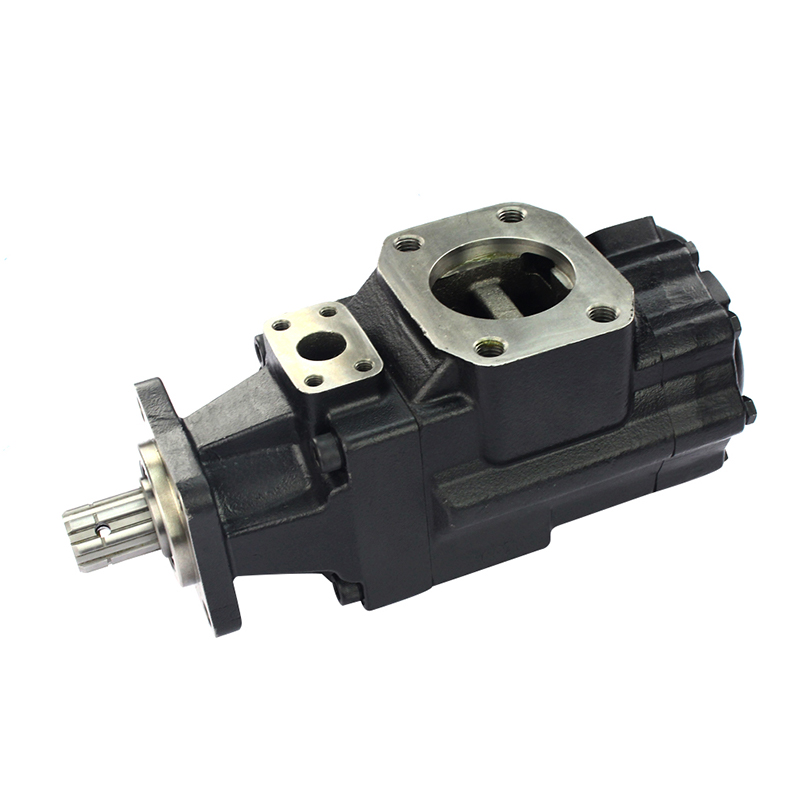
Even perfectly selected Parker Denison vane pumps will fail prematurely if installed, commissioned, or maintained incorrectly. The upgraded service includes a mandatory technical training program designed to bridge the knowledge gap between general hydraulics and Denison-specific engineering nuances.
Training Module Breakdown
- Installation & Commissioning: Proper shaft alignment tolerances (typically <0.05mm), torque sequences for mounting bolts, and initial priming procedures to prevent dry-start damage.
- Troubleshooting Methodology: Systematic diagnostic flowsheets specific to Denison vane architecture, distinguishing between mechanical wear, contamination issues, and system-induced failures.
- Maintenance Best Practices: Correct disassembly/reassembly techniques, vane orientation verification, and seal installation protocols that preserve warranty coverage.
- System Integration: Understanding how accumulator sizing, relief valve settings, and cooler capacity interact with vane pump performance characteristics.
Knowledge Retention Strategy
Training is not a one-time event but a continuous cycle. The service upgrade includes quarterly technical refreshers and access to an updated digital knowledge base. Post-training assessments show that technicians who complete the full curriculum reduce diagnostic time by an average of 45% compared to those relying solely on generic hydraulic manuals. This accelerated troubleshooting directly translates to faster machine recovery and higher overall equipment effectiveness.
Implementation Roadmap for Service Upgrade
Transitioning to this enhanced service model requires a structured approach to maximize value without disrupting ongoing operations. The following phased implementation strategy has proven effective across diverse manufacturing environments:
Phase 1: Assessment & Baseline
- Conduct comprehensive audit of existing Parker Denison installations and failure history.
- Establish baseline KPIs for MTBF, energy consumption, and maintenance labor hours.
- Identify critical applications where custom selection offers highest immediate ROI.
Phase 2: Pilot Deployment
- Apply custom selection protocol to 2-3 high-priority units.
- Train core maintenance team on pilot units before broader rollout.
- Monitor performance for 90 days to validate selection accuracy and training effectiveness.
Phase 3: Full Integration
- Roll out custom selection as standard procedure for all new replacements and upgrades.
- Integrate training modules into annual competency certification programs.
- Establish feedback loop between field technicians and factory engineers for continuous service refinement.
Organizations following this roadmap typically achieve full service maturity within 6-9 months, with measurable performance improvements visible as early as Phase 2 completion.
Long-Term Value Proposition
The upgraded factory service for Parker Denison vane pumps represents a strategic shift from reactive parts procurement to proactive reliability management. While the initial investment in custom selection and training exceeds traditional purchasing costs, the total cost of ownership over a 5-year period is consistently lower due to extended component life, reduced energy waste, and minimized production losses.
Beyond direct financial metrics, this service model builds internal organizational capability. Maintenance teams develop deeper expertise in Denison-specific technologies, reducing dependency on external emergency support and enabling more confident decision-making during future system expansions or modifications. This knowledge capital becomes a sustainable competitive advantage that persists regardless of personnel changes or market fluctuations.