


 русский
 Español
 عربى
عربى

A hydraulic pump on a construction machine gave only 480 hours of service before the technician noticed the distinctive gravel-like noise coming from the suction side. When the unit was opened, the inlet area and the pump cartridge showed deep pits and rough surfaces. That was cavitation, not a defective part. Cavitation is the leading cause of premature pump failure in hydraulic systems, and it can almost always be avoided by understanding the conditions that trigger it.
Cavitation happens when the fluid pressure at the pump inlet drops below the vapor pressure of the oil, forming vapor bubbles that collapse violently as they are pushed into the high-pressure zone inside the pump. The collapse generates localized shock waves that erode metal, cause vibration, and eventually lead to pump destruction. For construction machinery operators, this means unplanned downtime and costly repairs. A replacement pump cartridge alone can cost hundreds of dollars, and the downtime for an excavator or hydraulic press can be even more expensive.
Content
What Cavitation Is and Why It Destroys Pumps
Cavitation is a physical process that occurs in any liquid pump. Every hydraulic fluid has a vapor pressure that rises with temperature. When the pressure on the suction side of the pump falls below that vapor pressure, the fluid begins to boil at ambient temperature, forming microscopic bubbles. As those bubbles travel into the pump's high-pressure region, they are collapsed by the surrounding fluid. These implosions act like microscopic hammers against the metal surfaces, generating shock waves with local pressures that can exceed 1,000 bar.
The margin between the available and required NPSH is what engineers call the NPSH margin. Keeping that margin healthy is the single most important design rule for preventing cavitation.
The damage from this process has a distinctive look. The affected areas, typically the suction port, the inlet edge of the vane cartridge, or the impeller, are pitted and feel rough to the touch. In severe cases, metal is missing altogether. Pump capacity drops, noise gets louder, and the risk of a complete pump seizure grows.
The Leading Causes of Cavitation in Pumps
Understanding the causes is the first step toward prevention. There are two general categories: suction-side causes and discharge-side causes. The table below summarizes the most common ones.
| Category | Cause | Effect on the pump |
|---|---|---|
| Suction | NPSHa lower than NPSHr | Bubbles form at the inlet |
| Suction | Clogged suction filter or strainer | Pressure drop and flow starvation |
| Suction | Suction line too long, too small, or too many bends | Excessive pressure loss |
| Suction | High fluid temperature | Vapor pressure rises, easier to cavitate |
| Suction | Pump mounted too high above the oil level | Insufficient head at the inlet |
| Discharge | Blocked outlet, closed valve, or high pressure setting | Discharge cavitation |
| Discharge | Operation beyond rated speed | Internal pressure drops below vapor pressure |
| System | Air ingress in the suction line | Gas pockets that mimic cavitation |
The most common category is suction-side cavitation. It occurs when the pump simply cannot draw enough fluid. The filter element is the most frequent culprit: as the filter clogs, the pressure differential across it rises, and the pressure at the pump inlet drops below the vapor pressure. Even a filter with a modest amount of contamination can cause this.
A second common cause is the suction line itself. If the line is narrower than the pump maker's recommendation, or if there are too many elbows and fittings, the fluid velocity in the suction line rises and local pressure falls. The same happens when the pump is mounted far above the reservoir: the suction lift exceeds what the fluid can safely supply.
Fluid temperature is a hidden cause that operators often overlook. The vapor pressure of most hydraulic oils increases significantly above 60°C. If a system runs at 70°C with a low oil level or a partially clogged filter, cavitation can begin even when the NPSH calculations looked fine at the design stage.
Discharge-side cavitation is less common but still serious. If the outlet line is obstructed, if a valve is only partially open, or if the pressure relief setpoint is raised beyond the pump's rated capacity, the pressure at the pumping elements can fall below the vapor pressure. In piston pumps and vane pumps alike, this condition produces the same telltale noise and damage.
Air entrainment from a leaking suction line can also mimic the symptoms of true cavitation. When the pump ingests air, the gas pockets collapse with a similar noise and cause similar erosion. The difference is that the root cause is air, not vapor pressure. Inspecting and tightening all suction line connections is a simple step that avoids many false alarms.
How to Detect Cavitation Before the Pump Fails
Cavitation gives clear warnings. The most reliable is sound: a steady "marbles in a jar" or gravel-like rattle that becomes worse when the workload increases. Vibration is the second sign. A pump that runs smoothly at 1,800 rpm but becomes rough at 2,200 rpm is telling you that the inlet is being restricted.
Performance changes are also common. Flow falls off gradually, and the hydraulic cylinder or motor on the downstream side moves more slowly than it did when the system was new. Pressure readings at the pump outlet fluctuate, and the oil may foam in the reservoir.
When you open the pump during a service interval, inspect the pump cartridge. The internal vane set is often the first part to show damage. Pitted vane tips, scoring on the port plate, and rough surfaces at the suction port are all indicators that cavitation has been happening. The good news is that the cartridge is a replaceable component. In a T6/T7 style pump, the cartridge can be swapped out without replacing the pump housing, which reduces the repair cost.
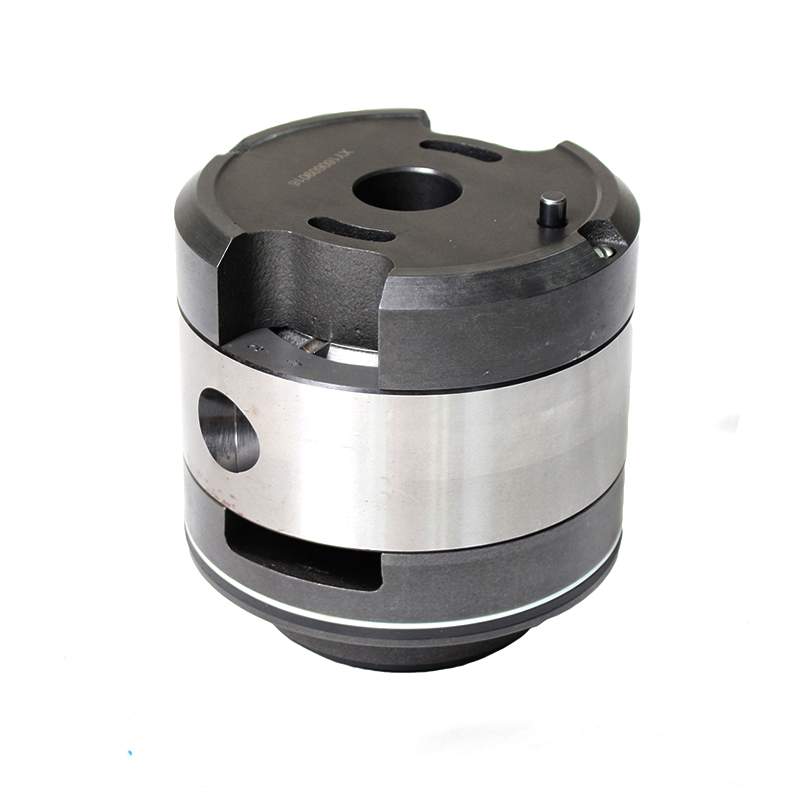 T6/T7 Cartridge Double-Lip Blade StructureT-series adopts a double-lip blade structure, and the double lips alternately contact the stator to reduce the impact of blades on the stator. T-series pump core oil s...View Product →
How to Prevent Cavitation in Real Hydraulic Systems
Prevention can be approached at three levels: system design, operating habits, and maintenance.
System design tips
- Calculate NPSHa under the worst-case condition: high oil temperature, contaminated filter, and lowest oil level in the reservoir. Keep a margin of at least 15-20% above the pump's required NPSHr.
- Keep the suction line as short and straight as possible. Fluid velocity in the suction line should not exceed 1.2 m/s for a hydraulic pump. Use a larger pipe if needed.
- Minimize fittings, elbows, and valves on the suction side. Every extra fitting adds a pressure drop.
- Use a return-line filter rather than a suction filter when possible. If a suction filter is unavoidable, select one with a low differential pressure and a generous bypass.
- In the reservoir, maintain a fluid level that covers the pump inlet. Use a baffle to prevent oil from swirling and drawing air into the pump.
- Choose a pump with an NPSHr that fits the available NPSH. A vane pump in the V series is designed with a compact cartridge and quiet operation, which can make it a better fit for suction-sensitive systems.
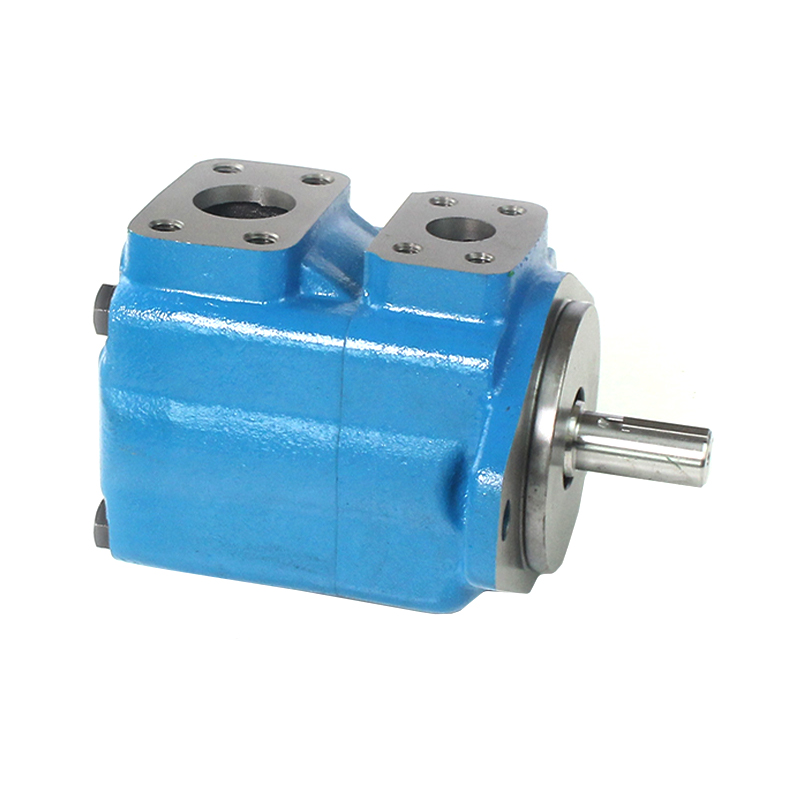 V Series Low Noise Single PumpV series low noise intra-vane pump meets the machine-tool industry. These pumps have high pressure. With large capacity, compact size, low noise level, and longer serv...View Product →
Operating habits
- Run the pump within the manufacturer's speed range. Most vane pumps are rated for 1,200 to 2,500 rpm. Pushing a pump to 3,000 rpm on a continuous basis invites cavitation even if the suction line looks fine.
- Keep fluid temperature in the 40-60°C range. Use a heat exchanger when a machine runs continuously.
- Do not set the relief valve above the pump manufacturer's maximum pressure. The pressure setpoint should match the system design, not the pump's theoretical limit.
- For high-pressure applications with variable load, a piston pump such as the A10VSO series offers a rigid design and good high-pressure tolerances.
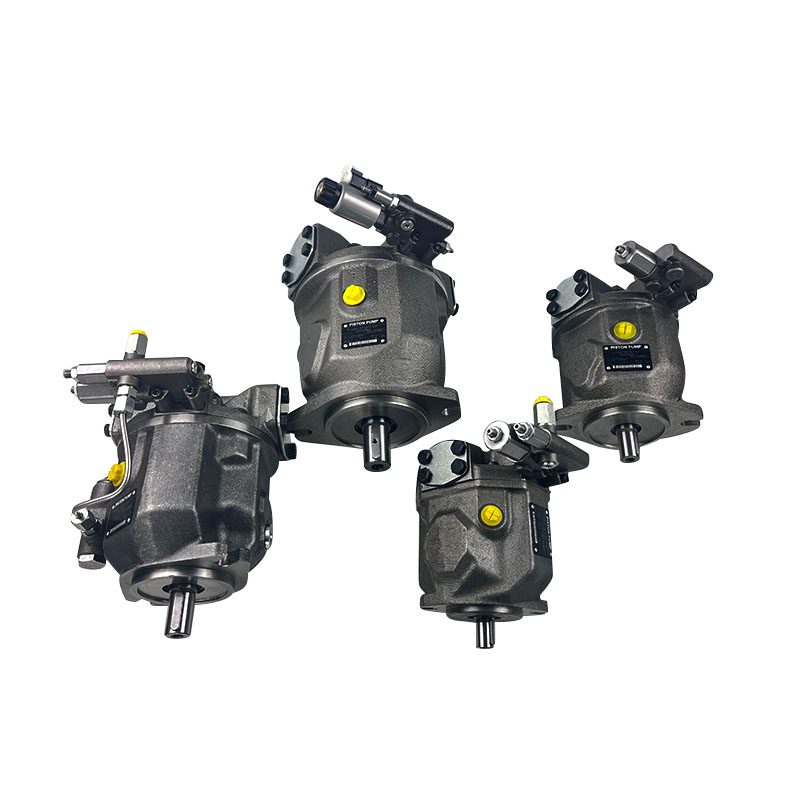 A10VSO 31 Series Piston PumpProduct Description:View Product →
Maintenance tips
- Replace suction filters on schedule, not when the indicator trips. A filter that is 80% clogged can still produce adequate pressure in the return line, but its suction-side pressure drop may already be high enough to upset the pump inlet.
- Check the pump cartridge during every scheduled service. If the vane tips show wear or pitting, that is an early signal.
- Monitor oil temperature and contamination. High temperature and dirt are a lethal combination.
The Bottom Line
Cavitation is a symptom of a hydraulic system that is poorly designed, improperly operated, or poorly maintained. The pump itself is often the victim, not the cause. Fix the inlet conditions, keep the oil cool and clean, and select a pump whose NPSH requirement matches the actual system. That is the simplest path to eliminating cavitation damage and keeping hydraulic equipment in service.