

 русский
 Español
 عربى
عربى

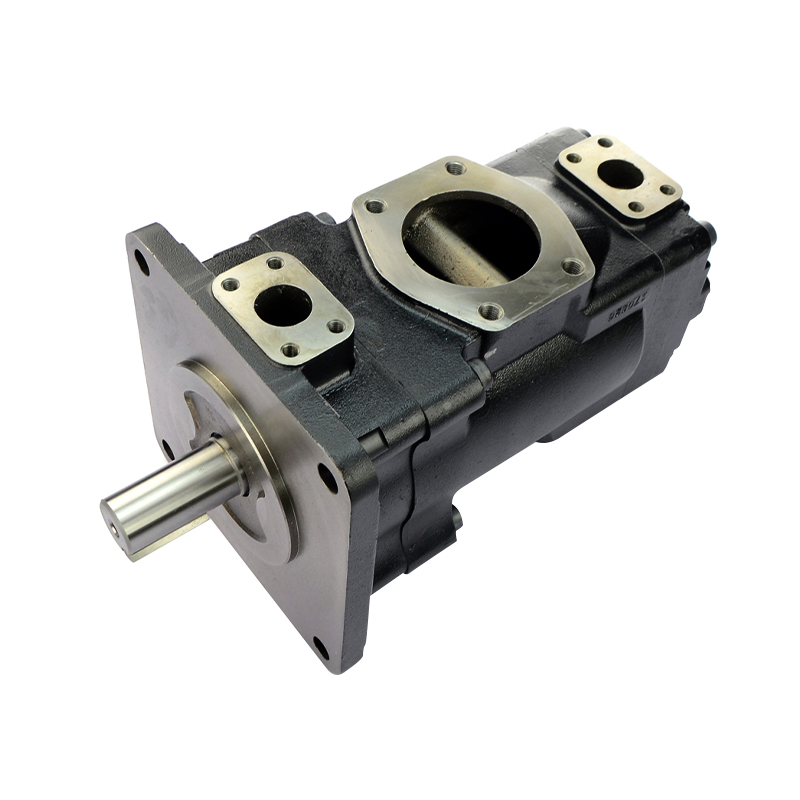
Parker Denison vane pumps represent the gold standard in hydraulic fluid power, renowned for their exceptional efficiency, low noise levels, and robust durability in demanding industrial and mobile applications. Originally developed by Denison Hydraulics and now part of Parker Hannifin’s portfolio, these pumps utilize a unique balanced vane design that minimizes side loads on the drive shaft, allowing for higher operating pressures and extended service life. For engineers and maintenance professionals, selecting a Parker Denison unit ensures reliable performance in systems requiring precise flow control and high volumetric efficiency, often exceeding 90% under optimal conditions.
The core advantage of these pumps lies in their versatility. They are available in single, double, and triple pump configurations, allowing for complex circuit designs within a compact footprint. Whether used in injection molding machines, forestry equipment, or marine steering gears, Parker Denison vane pumps provide consistent flow with minimal pulsation, reducing stress on downstream components and enhancing overall system stability.
Content
Technical Design and Operational Principles
The operational superiority of Parker Denison vane pumps stems from their balanced cartridge kit design. Unlike unbalanced vane pumps, which exert significant radial loads on the bearings, the balanced design features two intake and two outlet ports positioned diametrically opposite each other. This configuration cancels out hydraulic forces, resulting in near-zero net side load on the drive shaft.
The Cartridge Kit Concept
A defining feature of Parker Denison pumps is the interchangeable cartridge kit, which contains the vanes, rotor, cam ring, and side plates. This modular design simplifies maintenance and allows for easy conversion between different displacement ratings or pressure capabilities without replacing the entire pump housing. For instance, a T6 series pump can be upgraded from a B cam to a C cam to increase pressure handling from 250 bar to 320 bar, offering flexibility for evolving system requirements.
Vane Mechanics and Lubrication
The vanes are forced against the cam ring by centrifugal force and hydraulic pressure from beneath the vane tip. This ensures a tight seal, minimizing internal leakage and maintaining high volumetric efficiency. The hydraulic balance also allows the pump to operate effectively with a wide range of hydraulic fluids, including mineral oils, water-glycol solutions, and phosphate esters, making them suitable for fire-resistant applications in steel mills and foundries.
Key Series and Applications
Parker offers several series of Denison vane pumps, each tailored to specific pressure ranges and flow requirements. Understanding the distinctions between the T6, T7, and T6C/T6D/T6E series is crucial for proper selection.
| Series | Max Pressure (Bar) | Displacement Range (cc/rev) | Primary Application |
|---|---|---|---|
| T6C/T6D/T6E | 250 - 320 | 5 - 175 | Industrial Machinery, Injection Molding |
| T7B/T7BB | 320 - 350 | 10 - 60 | High-Pressure Hydraulic Systems |
| T67DB/T67DC | 250 - 320 | Variable (Double) | Mobile Hydraulics, Forestry |
Industrial vs. Mobile Use
The T6 series is predominantly used in stationary industrial applications where low noise and high efficiency are paramount. In contrast, the T7 and specialized mobile series are designed to withstand the harsh vibrations and shock loads typical of off-highway equipment. These mobile units often feature reinforced bearings and housing materials to ensure longevity in excavators, cranes, and agricultural machinery.
Maintenance and Troubleshooting
While Parker Denison vane pumps are built for durability, proper maintenance is essential to maximize their lifespan. Most failures are attributed to contamination, improper fluid viscosity, or cavitation. Regular inspection and adherence to operational limits can prevent costly downtime.
Common Failure Modes
- Vane Sticking: Caused by varnish buildup or particulate contamination. This leads to reduced flow and pressure fluctuations. Maintaining ISO cleanliness codes of 18/16/13 or better is recommended.
- Cam Ring Wear: Often results from running the pump at low speeds with high pressure, preventing adequate hydrodynamic lubrication. Ensure minimum speed requirements (typically 600-800 RPM) are met.
- Cavitation: Identified by a high-pitched whining noise, cavitation occurs when inlet pressure is too low or fluid viscosity is too high. This causes pitting on the vane tips and cam ring surface.
Installation Best Practices
To ensure optimal performance, align the pump and motor coupling precisely to avoid shaft seal damage. Use flexible couplings to accommodate minor misalignments. Additionally, prime the pump before startup by filling the casing with hydraulic fluid to prevent dry running, which can destroy the vanes and cam ring within seconds. Always verify that the rotation direction matches the pump’s designation, as reverse rotation can cause immediate catastrophic failure.
Efficiency and Energy Savings
In an era of increasing energy costs, the high efficiency of Parker Denison vane pumps offers significant operational savings. Their balanced design reduces mechanical friction, while the tight tolerances between vanes and the cam ring minimize internal leakage.
Compared to gear pumps, vane pumps typically offer 5-10% higher overall efficiency, particularly at higher pressures. This efficiency translates to lower heat generation, reducing the load on cooling systems and extending the life of the hydraulic fluid. For large-scale industrial operations, upgrading to high-efficiency Parker Denison units can result in substantial reductions in energy consumption and carbon footprint, aligning with modern sustainability goals.