


 русский
 Español
 عربى
عربى

Industrial hydraulic systems are undergoing a rapid green overhaul, and hydraulic vane pumps have become the definitive technology for slashing energy use and carbon output. Combining volumetric efficiencies of 90–95% with a modular, easily recyclable construction, modern variable?displacement vane pumps can reduce a hydraulic circuit’s energy consumption by 20–30% compared to fixed gear pumps. This directly lowers Scope?2 emissions, while the pump’s long service life and over 90% material recycling rate address Scope?3 and circular economy targets. In chemical, metallurgical and heavy machinery applications, these pumps are no longer just a component upgrade—they are a strategic lever for profitable decarbonization.
Content
- 1 How Hydraulic Vane Pumps Deliver Superior Energy Efficiency
- 2 Long Life and Low?Consumption Design: The Lifecycle Argument
- 3 Recyclability: Closing the Material Loop
- 4 Industry Applications Driving the Green Transition
- 5 Vane Pumps Versus Other Hydraulic Technologies
- 6 Practical Selection Criteria for Energy?Saving Vane Pumps
- 7 The Broader Impact: Vane Pumps in a Decarbonized Hydraulic Future
How Hydraulic Vane Pumps Deliver Superior Energy Efficiency
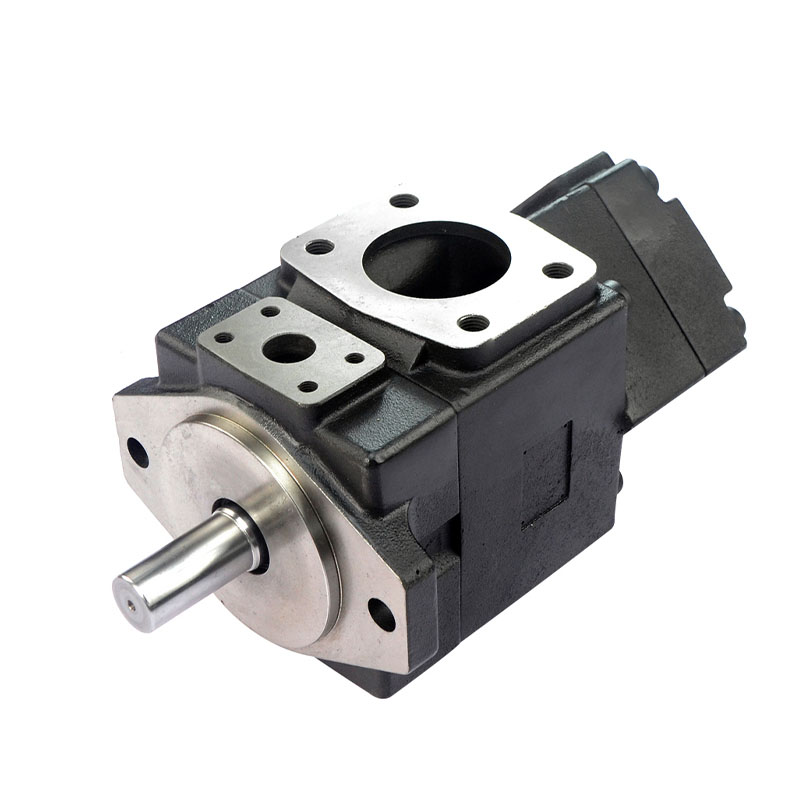
The energy advantage starts with the pump’s internal architecture. A slotted rotor turns inside a cam ring, with vanes sliding in and out to create expanding and contracting chambers. Unlike gear pumps that force a fixed volume of oil regardless of demand, variable?displacement vane pumps adjust the eccentricity of the cam ring to deliver only the flow that is actually needed. This on?demand operation eliminates the wasteful bypass flow and pressure drops that plague fixed?displacement systems.
Pressure?balanced side plates and hydrodynamic lubrication of the vane tips keep internal leakage to a minimum, sustaining volumetric efficiency above 90% even at pressures up to 250?bar. In a typical 30?kW press circuit, replacing a fixed gear pump with a pressure?compensated vane pump can cut input power by 6–9?kW, saving over 15?MWh of electricity per year in a three?shift operation. This efficiency also reduces cooling requirements, further trimming auxiliary energy consumption.
Long Life and Low?Consumption Design: The Lifecycle Argument
Energy savings are only part of the picture. The mechanical simplicity and self?compensating wear characteristics of vane pumps translate into a service life that far exceeds alternatives. While a typical external gear pump may require overhaul after 8,000–12,000 hours, a well?maintained industrial vane pump routinely reaches 20,000–25,000 hours before any major intervention. The vane tips maintain continuous contact with the cam ring, so any gradual wear is automatically taken up, preserving volumetric performance throughout the pump’s life.
Lower wear means fewer replacement parts, less downtime and a dramatically reduced environmental footprint from manufacturing and logistics. A European steel mill documented a 35% reduction in hydraulic pump replacement frequency after switching to variable vane pumps on its continuous caster withdrawal units. The pumps’ modular cartridge design also allows rapid field repair: a worn cartridge can be swapped in under an hour, leaving the cast?iron or aluminium housing in place.
Recyclability: Closing the Material Loop
End?of?life recovery is a cornerstone of the circular economy, and vane pumps excel here. The main structural components—high?grade cast iron, aluminium alloy, and bearing steel—are already standard streams in metal recycling. After draining the hydraulic fluid, over 90% of the pump’s mass can be re?introduced into material cycles with minimal energy input. Many manufacturers offer take?back programs where used cartridges are remanufactured to original specifications, delivering performance identical to new units while cutting material demand by up to 70%.
Industry Applications Driving the Green Transition
Chemical and Process Industries
In chemical plants, hydraulic power units often run 24/7 on reactor stirrers, extruders and valve actuators. A project at a German specialty chemicals producer replaced six fixed?displacement pumps with variable?displacement vane pumps on a polymer compounding line. Annual electricity consumption dropped by 28%, saving approximately 120?MWh and eliminating 50?t of CO? per year. The pumps’ smooth, low?pulsation flow also improved product consistency by reducing pressure spikes in the die head.
Metallurgical Plants
Steel and aluminium mills depend on high?pressure hydraulic systems for rolling, shearing and levelling. Here, energy?saving vane pumps provide a dual benefit: they match flow to the intermittent demands of press cylinders, and their quiet operation (commonly 10–15?dB(A) lower than piston pumps) improves working conditions. A hot?strip mill in India documented a 22% reduction in hydraulic energy intensity after standardising on variable vane pumps, while measured sound pressure levels near the operator pulpits fell from 85 to 72?dB(A).
Construction and Off?Highway Machinery
Mobile equipment such as excavators, wheel loaders and drilling rigs increasingly adopts load?sensing variable vane pumps. By delivering only the flow and pressure the work function requires, these pumps cut engine fuel consumption by 10–15% over fixed?displacement alternatives. An 20?tonne excavator with a variable vane pump consumed 2.1?litres less diesel per hour during a typical duty cycle, accumulating savings of over 4,000?litres of fuel and 10?t of CO? annually per machine.
Vane Pumps Versus Other Hydraulic Technologies
Choosing the right pump means weighing efficiency, cost, noise and maintainability. The table below contrasts key characteristics of hydraulic vane pumps with external gear pumps and axial piston pumps, highlighting why vane technology is increasingly specified for energy?sensitive applications.
| Parameter | Vane Pump | Gear Pump | Axial Piston Pump |
|---|---|---|---|
| Volumetric efficiency | 90–95% | 85–92% | 92–98% |
| Energy saving potential (vs. fixed displacement) | 20–30% reduction | 5–15% (with unloading circuit) | 25–35% reduction |
| Service life (typical) | 20,000–25,000 h | 8,000–12,000 h | 15,000–20,000 h |
| Noise level | 65–75 dB(A) | 75–85 dB(A) | 70–85 dB(A) |
| Recyclability | >90% (ferrous & Al) | >85% | >80% (complex alloys) |
| Initial cost | Moderate | Low | High |
While axial piston pumps offer slightly higher peak efficiency, vane pumps strike an unmatched balance of efficiency, durability, low noise and recyclability. The moderate initial investment is usually recovered within 12–18 months through energy savings alone, making them the pragmatic choice for continuous?duty greenfield and retrofit projects alike.
Practical Selection Criteria for Energy?Saving Vane Pumps
To maximise the carbon reduction potential, the pump must be matched carefully to the application. The following decision points turn a generic specification into a genuine efficiency driver.
Displacement Control Strategy
- Pressure?compensated control: holds a set standby pressure, reducing flow to near zero when the system is idle—ideal for clamping and holding circuits.
- Load?sensing control: maintains a constant pressure margin above the highest load, delivering exactly the required flow. This is the most efficient option for multi?function machinery with highly variable demands.
- Fixed displacement with unloading: where a variable pump is not feasible, a fixed vane pump combined with an accumulator and unloading valve can still capture significant energy savings.
Fluid and Temperature Compatibility
Standard industrial vane pumps perform best on mineral oil with a viscosity of 16–100?mm2/s. For fire?resistant water?glycol fluids or high?temperature environments, special vane materials (carbon?graphite or PEEK) and coated cam rings are required. Always consult the manufacturer’s fluid?rating chart; using the wrong fluid can reduce service life by 50% or more.
Noise?Sensitive Installations
Because vane pumps inherently produce less pulsation, they are the first choice for power units located close to operators or in laboratory settings. Adding a sound?dampening cover and flexible hoses can drop the sound level below 65?dB(A), meeting even the strictest workplace noise directives.
The Broader Impact: Vane Pumps in a Decarbonized Hydraulic Future
The surge in demand for energy?saving vane pumps is not a passing trend; it is a structural shift driven by tightening emissions regulations, rising energy costs and corporate net?zero commitments. The technology’s ability to deliver immediate, verifiable energy reductions—often with a payback period of less than two years—makes it one of the most actionable measures in an industrial sustainability roadmap. As the hydraulic industry moves toward fully electrified, digitally controlled systems, the flexible, efficient vane pump will remain a central building block, helping heavy industries cut carbon while maintaining the relentless power densities modern production demands.