


 русский
 Español
 عربى
عربى

An excavator boom that drifts under load, a press that loses tonnage halfway through the stroke, a power unit that runs quietly when the oil is cold and screams once it is hot: these are the calls that fill a maintenance log, and they rarely share a single cause.
The short answer is that contamination, heat, air entrainment and set-point drift cause the large majority of hydraulic faults. A five-step sequence, in this order, will normally tell you which of the four you are facing in under an hour: confirm the complaint, measure pressure, check temperature and aeration, read the oil, isolate the component. You can do most of that with a gauge, a thermometer and a filter element, without draining a reservoir or opening a fitting that does not need to be opened.
Content
- 1 Why Four Failure Families Explain Most Breakdowns
- 2 A Five-Step Troubleshooting Sequence That Works on Any Circuit
- 3 Symptom Patterns and What They Usually Mean
- 4 Low Pressure Under Load: Relief Valves and Set-Point Drift
- 5 Flow Loss and Pump Wear: Where the Money Usually Goes
- 6 Heat, Noise and Vibration: The Slow Killers
- 7 Rebuild, Replace or Redesign the System
- 8 Spares and Records That Prevent Repeat Failures
Why Four Failure Families Explain Most Breakdowns
None of these problems stays in its own lane. Air entrained in the oil collapses violently as it travels from the suction side to the pressure side, and that collapse erodes metal from the pump's internal surfaces; the particles it releases drive up contamination. Hotter oil is thinner oil, so internal leakage climbs, the pump has to work harder to hold the same pressure, and the temperature rises further. Set-point drift sits quietly behind the other three: a relief valve set at 210 bar five years ago may be cracking at 185 bar today, and nothing on the machine looks broken.
That interdependence is why parts-swapping is so expensive. Replacing the pump cures the symptom for a few weeks and leaves the suction leak, the tired relief valve and the dirty oil in place to destroy the new unit.
A Five-Step Troubleshooting Sequence That Works on Any Circuit
The sequence matters more than the tool kit. Skipping step one sends you into the wrong half of the machine; skipping step five means you replace a healthy component.
Step 1: Turn the complaint into a number
"The bucket feels weak" is a symptom, not a measurement. Define it: the boom stalls at 120 bar instead of 180 bar at rated flow, with the oil at normal operating temperature. Confirm the machine is warm and running the specified viscosity before you record anything, because a cold machine will always show higher pressure and lower flow than a warm one.
Step 2: Measure pressure before flow
Pressure is the cheapest measurement and the fastest to interpret. Connect a calibrated gauge to the test port, load the function against its relief setting and compare the reading with the specification. Pressure that is low everywhere points upstream, to the pump or its drive coupling. Pressure that is correct at the pump outlet but low at the actuator points downstream, to a valve, a cylinder seal or a hose.
Step 3: Check temperature and aeration
Reservoir temperature in most industrial and mobile systems settles between 40 and 60 degrees Celsius. Above 70 degrees, seal life falls quickly and oil oxidation accelerates. Look into the reservoir with the machine running: foam on the surface, a milky tint, or a whine that rises with pump speed all indicate air entering the suction side. Check the suction hose, the clamps, the strainer and the shaft seal before condemning the pump.
Step 4: Read the oil and the filter
A patch test or a particle count tells you whether the system is generating debris. Cut the used filter element open and spread the pleats: fine grey paste suggests normal wear, bright metallic flakes point to a failing pump or motor, and black rubber fragments point to a degrading hose liner. Any of these findings changes the repair plan before a single component has been removed.
Step 5: Isolate the component last
Only after the circuit is proven should you pull a pump, motor or valve. Deadhead the pump briefly, ten seconds at most with the oil warm, to separate pump capability from valve losses. Cap and plug as you go; a circuit that ingests dirt during diagnosis has just been handed a second fault.
Symptom Patterns and What They Usually Mean
| Symptom | Most likely cause | Fast check | Typical action |
|---|---|---|---|
| Actuator drifts under load | Internal leakage in cylinder or valve spool | Hold a load and compare rod-end and cap-end temperatures | Reseal cylinder, inspect spool clearance |
| Low pressure under load | Pump wear, relief valve drift, worn coupling | Deadhead pressure warm against specification | Reset or replace valve, rebuild pump |
| Jerky or erratic motion | Air entrainment, suction leak, low oil level | Look for foam and check suction clamps | Seal the suction side, bleed the circuit |
| Rising oil temperature | Excess internal leakage, fouled cooler, high duty cycle | Compare return-line and reservoir temperature | Repair leakage path, clean or resize cooler |
| Noise and vibration | Cavitation, misalignment, worn bearings | Listen at the pump housing and the coupling | Reduce inlet restriction, realign or replace pump |
| Flow falls off as oil warms | Worn vane tips and cam ring | Compare cold and hot cycle times on one function | Fit a new cartridge rather than a whole pump |
Low Pressure Under Load: Relief Valves and Set-Point Drift
When a system cannot reach its rated pressure, there are three suspects: the pump, the relief valve, and the load-sensing or pressure-compensator control. Deadhead the pump with the oil at temperature. If the gauge climbs to the relief setting and holds, the pump is probably healthy and the loss is downstream. If it stalls below specification, the fault lies at or before the relief valve.
Relief valves drift for ordinary reasons: a fatigued spring, a scored seat, or a shim pack disturbed during an earlier repair. Direct-acting valves are easy to test and easy to reset on a bench, which is why they remain standard on compact power units and on circuits that protect a single actuator.
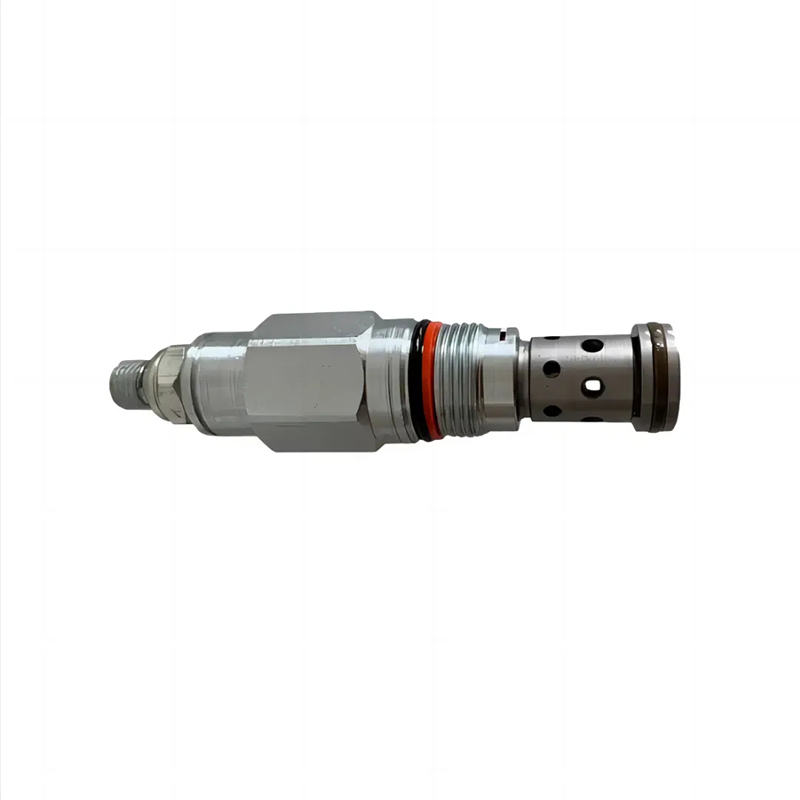 DBD Direct Acting Relief ValveThe page lists the DBD direct-acting relief valve with quote options; visible specs are absent, but direct-acting valves suit compact circuits and single-actuator protection.View Product →
Flow Loss and Pump Wear: Where the Money Usually Goes
Vane pumps fail predictably. The vane tips and the inner surface of the cam ring wear against each other, tip clearance opens up, and flow falls away long before the pump becomes noisy. A machine that is slow but strong from a cold start and weak once warm is showing exactly that pattern: the oil thins, leakage across the worn tips rises, and volumetric efficiency drops.
The economics matter here. A full pump replacement costs far more than a cartridge, and on multi-stage units a cartridge swap keeps the original housing, shaft and porting in service. That is also why understanding how pressure and flow are generated inside the pump makes diagnosis quicker, because you can tell whether the loss is at the pumping chamber or further downstream.
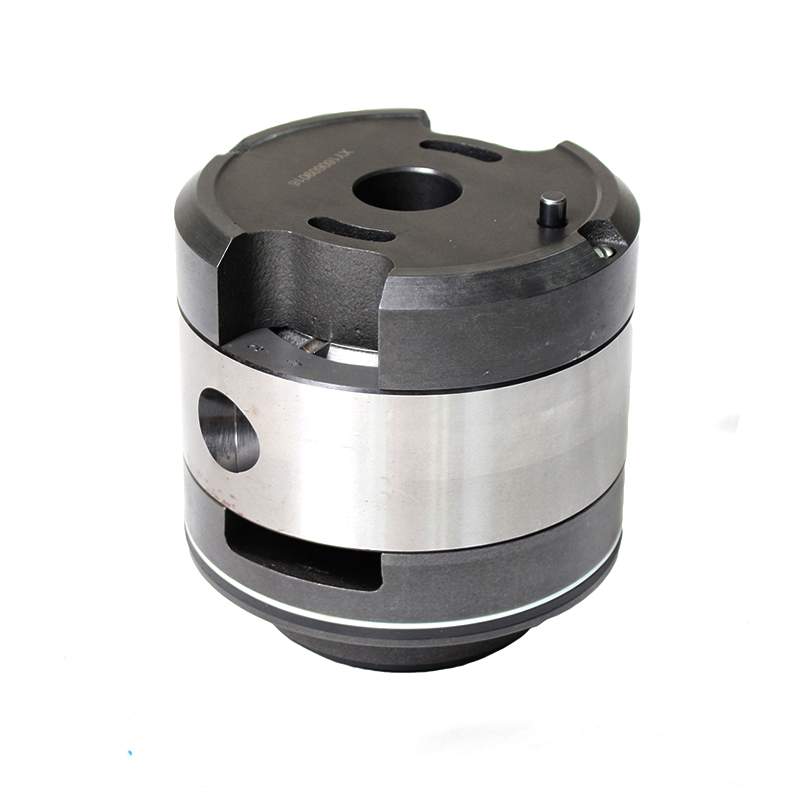 T6/T7 Cartridge Double-Lip Blade StructureThis T6/T7 cartridge uses double-lip blades and lists T6C and D/E blade counts; worth viewing for pump repair economics.View Product →
Heat, Noise and Vibration: The Slow Killers
Every 10 degrees above a system's design temperature roughly halves the life of the oil and of the elastomer seals around it. Heat normally comes from energy that should be doing work but is instead being throttled across a restriction: a partly open relief valve, a mis-set compensator, an undersized return line. Noise is a warning with a location. A whine that rises with pump speed is almost always cavitation at the inlet; a rhythmic knock is often a coupling or a worn bearing; a high-pitched squeal from a cylinder is usually air, not friction.
Rebuild, Replace or Redesign the System
A workable decision rule: if the fault sits in one component and the oil is clean, repair the component. If two or more of the four failure families appear at the same time, the circuit itself is the problem, and replacing parts one at a time will keep consuming budget and downtime. Mobile equipment such as construction machinery is especially hard on hydraulics, with high duty cycles, dust, shock loads and long intervals between service windows, so correcting the circuit is often cheaper than rebuilding the same pump every season.
Where the original system is undersized, runs hot or is worn out across several functions, a purpose-built power unit or complete hydraulic system is the more durable route. A supplier that builds both the components and the complete system can match pump displacement, valve settings and cooling capacity to the real duty cycle instead of to a catalogue number, and can keep the spares list short by standardising on a few proven pump families.
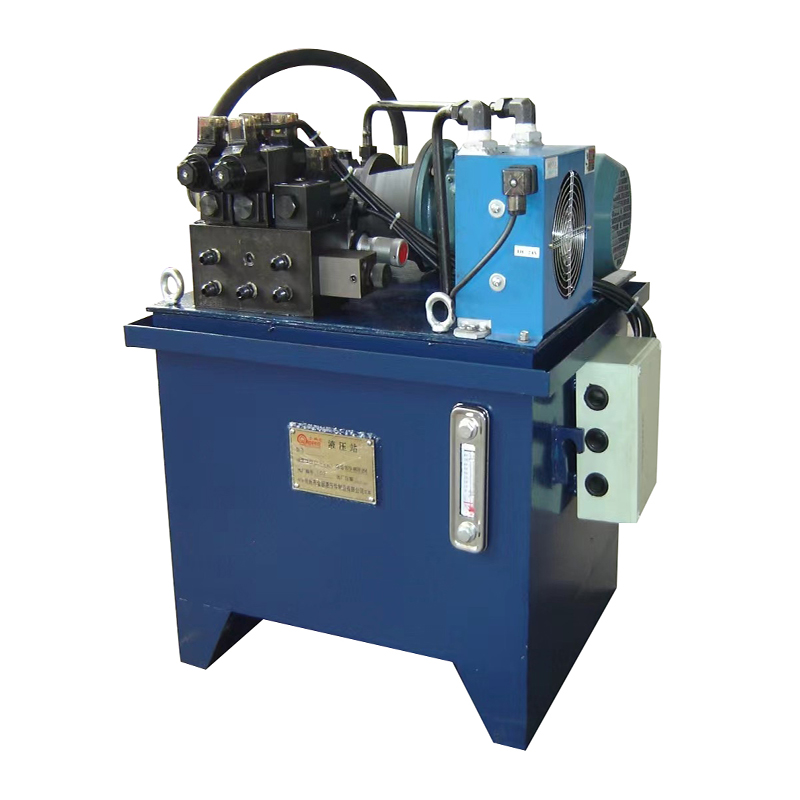 Hydraulic System for Construction, Industrial, and Aerospace ApplicationsThe page presents Shertech's Hydraulic System for construction, industrial, and aerospace applications; it may suit complete-system needs but lacks visible specifications.View Product →
Spares and Records That Prevent Repeat Failures
Troubleshooting ends with a repair, but the real value is in what you write down. Record the pressures, temperatures and cycle times you measured, the relief valve setting before and after adjustment, and the filter condition. Keep a cartridge on the shelf for pump models that run in more than one machine, and store it sealed; a cartridge left on an open shelf for a year collects enough grit to shorten its service life.
Two habits pay for themselves: recheck the relief setting and the oil temperature two weeks after any repair, and log every top-up with its source. A hydraulic system that suddenly needs oil twice as often is telling you about a leak you have not found yet.
Hydraulic system troubleshooting rewards order over instinct. Measure pressure, watch the temperature, read the oil, and only then take the machine apart. Done in that sequence, most faults are identified with a gauge and a thermometer rather than with a crane and a purchase order.