


 русский
 Español
 عربى
عربى

A new hydraulic pump arrives at your workshop. The crate is intact, the shaft rotates smoothly by hand, and the model number matches the order. Without a hydraulic pump test, that is the full extent of your knowledge about the unit's performance. A structured test routine changes that: it verifies flow, pressure, efficiency, and noise against the manufacturer's specification before the pump is mounted on a machine that depends on it.
Content
Why a Hydraulic Pump Test Earns Its Keep
A hydraulic pump is the energy source for the entire circuit. If it delivers less flow than expected, actuators move slowly and productivity drops. If it cannot hold rated pressure, the machine loses force. If it generates excessive noise, something inside is already wearing. A hydraulic pump test detects all three problems before they become downtime.
Testing also protects the rest of the system. Contamination, assembly errors, and internal misalignment in a new pump can send debris into valves and actuators. A test with clean, filtered oil catches abnormal wear patterns early. In addition, the results establish a baseline. Months later, retest the pump and compare the numbers: a 5 percent drop in volumetric efficiency is an early warning, while a 20 percent drop means failure is close.
Core Parameters a Hydraulic Pump Test Should Cover
Every meaningful test routine is built on the same core parameters. These are the values printed on the pump data sheet, and they are the values you should verify at the bench before installation.
| Parameter | What It Verifies | Typical Observation |
|---|---|---|
| Flow rate | Delivered volume per revolution at a given speed | Compare against theoretical displacement; large shortfall indicates internal leakage |
| Pressure performance | Ability to reach and hold rated discharge pressure | Pressure drop under load signals bypass past wear plates or vanes |
| Volumetric efficiency | Ratio of actual to theoretical flow | New vane pumps typically run above 90 percent; lower values mean worn clearances |
| Noise and vibration | Mechanical condition and hydraulic smoothness | Rising noise with pressure often points to cavitation or worn bearings |
| Temperature rise | Heat generated by internal friction and leakage | Excessive rise accelerates seal and fluid degradation |
| External leakage | Integrity of shaft seals and body joints | Any visible leakage at rated pressure is a rejection criterion |
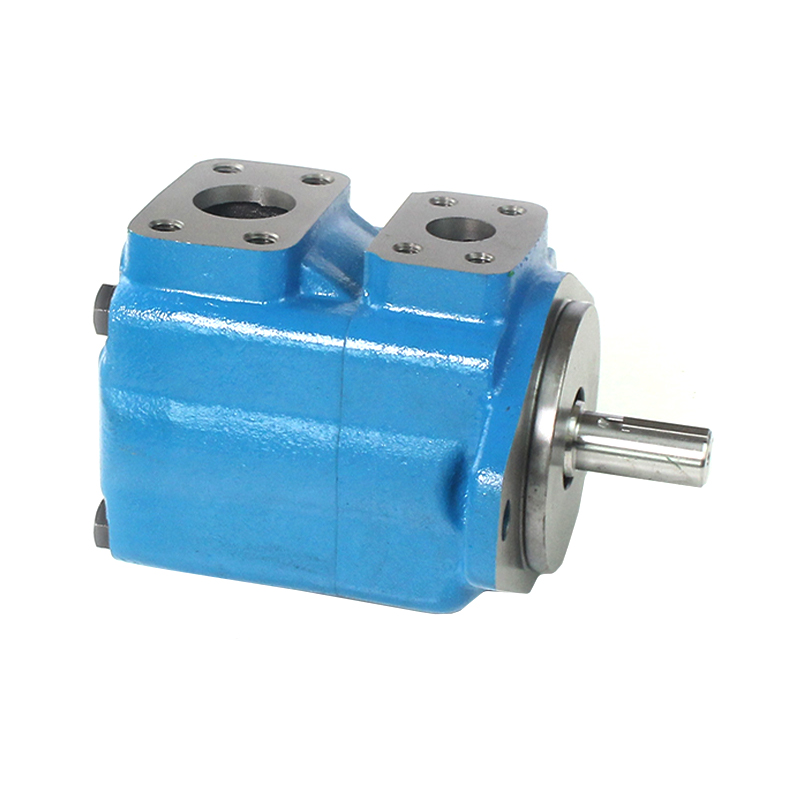 V Series Low-Noise Intra-Vane Pump for Machine ToolsThis compact vane pump is designed for quiet operation and long service life in industrial hydraulics. Its performance parameters are essential to verify when checking volumetric efficiency before installation.View Product →
Volumetric efficiency deserves special attention. It is the quickest single indicator of internal condition because it combines clearance, seal, and viscosity effects into one number. When efficiency falls below the manufacturer's specification, the pump may still produce flow, but it does so at the cost of heat, energy, and eventual breakdown.
Standard Hydraulic Pump Test Procedures
Test procedures vary by pump type and application, yet most follow the same sequence: ramp up gradually, observe behavior at each stage, and stop if any parameter exceeds its limit.
No-Load Run-In
The pump is started at low or zero discharge pressure and left to circulate oil until temperature stabilizes. This stage seats the sealing surfaces, particularly in vane pumps where the vanes must extend and contact the cam ring smoothly. Listening for unusual noise at no load is the first pass/fail check.
Stepped Pressure Test
Discharge pressure is raised in increments, typically 25 percent of rated pressure at a time. At each step, record flow, noise, temperature, and any leakage. The pump should hold flow within a narrow band at each step. A flow drop that accelerates with pressure indicates that internal clearances are opening up under load.
Efficiency and Leakage Measurement
At rated pressure and rated speed, measure actual flow and compare it with theoretical displacement multiplied by speed. That ratio is the volumetric efficiency. Also check case drain flow: in most pumps, a rising case drain flow means the piston or vane seals are passing more oil than they should. In piston pumps, the case drain port provides the same early warning.
Noise and Vibration Check
Noise measurement is not only about operator comfort. Each pump type has a characteristic sound envelope, and deviations reveal mechanical wear, cavitation, or aeration. If your shop does not use a sound meter, a consistent listening point at the same distance from the pump still catches the biggest changes between tests. For a deeper look at this issue, see our guide on controlling noise and vibration when a vane pump runs at high speed.
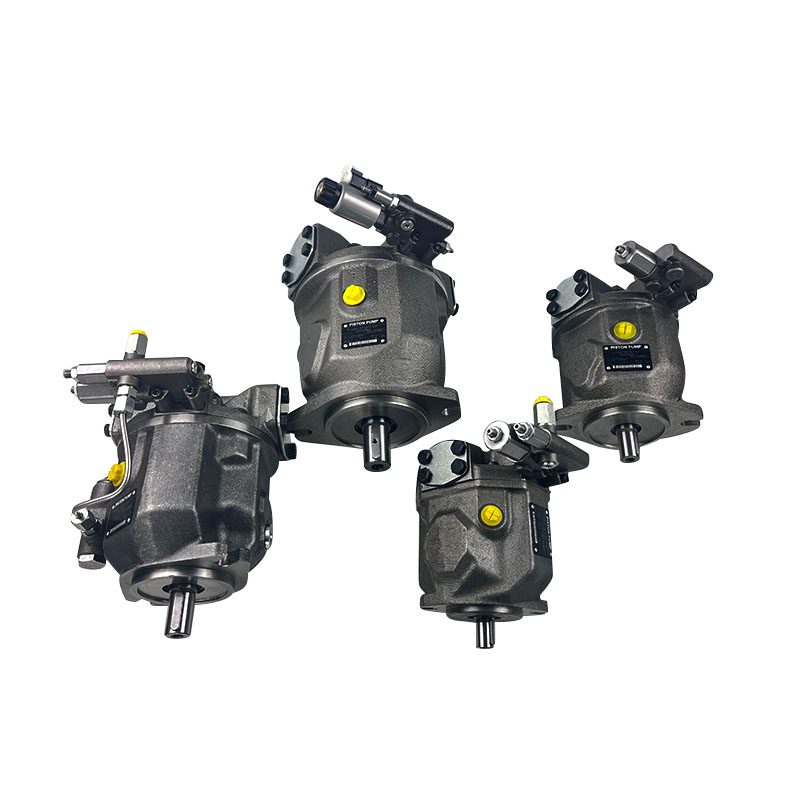 A10VSO 31 Series Axial Piston Variable PumpThis swashplate-type piston pump offers continuous operation up to 28 MPa and infinite flow adjustment. It is relevant when comparing test results under ISO 4409 steady-state conditions.View Product →
Test Standards and How to Set Acceptance Limits
International standards give a common language for pump testing. ISO 4409 covers the determination of volumetric and mechanical characteristics of positive-displacement pumps and motors under steady-state conditions. It is the reference when you need to compare test results between workshops, suppliers, or maintenance intervals.
Acceptance limits, beyond the standard procedure, come from the pump manufacturer. A reputable supplier states flow at rated pressure, minimum volumetric efficiency, maximum noise level, and operating temperature range. Your hydraulic pump test simply checks the unit against those declared values. For a rebuilt pump, the original factory specification still serves as the target.
- Confirm oil viscosity and temperature before starting the test; readings taken with cold oil are misleading.
- Use filtered oil at the same cleanliness level the pump will see in service.
- Allow the system to stabilize at each pressure step before recording data.
- Record test conditions alongside results; a test without conditions is not repeatable.
Factory Testing vs. Field Testing: Different Questions
Factory testing answers one question: did this pump leave production in specification? The manufacturer controls oil temperature, viscosity, cleanliness, and load, so the results are precise and repeatable. This is the moment to catch a housing machined out of tolerance or a cartridge assembled with wrong clearances.
Field testing answers a different question: is this pump still performing correctly inside the machine? Conditions are less controlled, and results include the rest of the circuit, such as piping losses, filter condition, and actuator leakage. But repeated field tests over time reveal trends, and trends are more useful than a single snapshot. A pump tested every 500 hours will show a slow decline long before it affects production.
This distinction matters when you choose a supplier. A manufacturer that cannot produce a test certificate from its own bench probably does not know its own product's limits. Conversely, a manufacturer that routinely tests every pump before dispatch simplifies your receiving inspection.
What to Look for in a Pump Supplier's Test Culture
Testing is a manufacturing discipline, not an afterthought. SherTech Hydraulic, with more than three decades of experience in hydraulic components, applies this principle across its entire pump lineup. When you source pumps for construction machinery applications, the factory's test documentation should accompany every unit, and the bench conditions should reflect the operating conditions of your machine.
- Do you test every pump individually or only sample the batch?
- At what pressure and oil temperature are the test results recorded?
- Can you share a sample test certificate?
- What is your acceptance threshold for volumetric efficiency on a new pump?
The answers reveal whether the supplier treats the hydraulic pump test as a genuine quality gate or as paperwork.
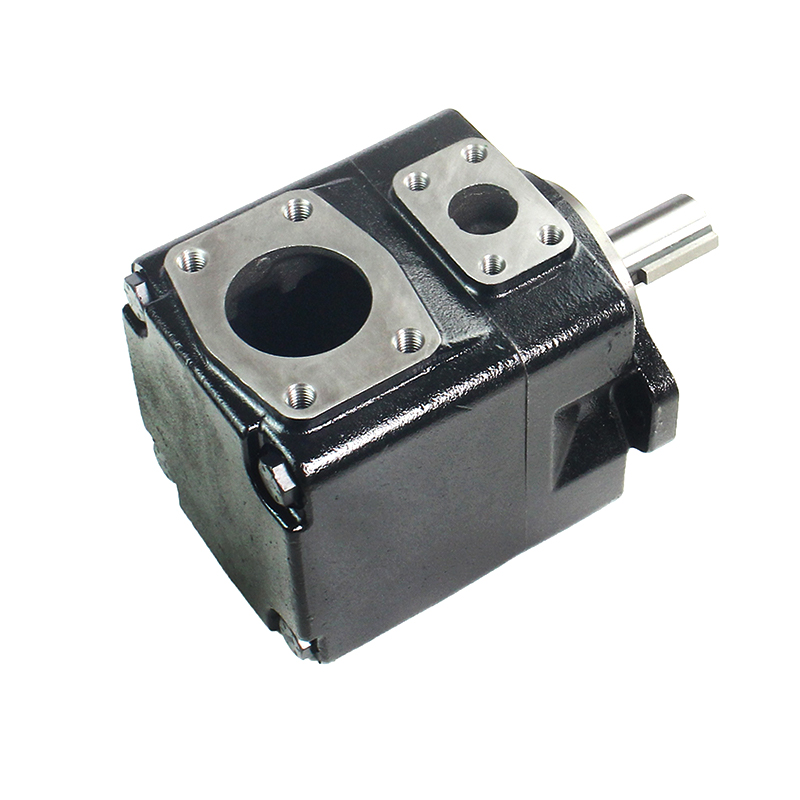 Denison T6/T7 Balanced Single Vane PumpThis fixed-displacement vane pump features a balanced pin-vane design for higher pressure, reduced noise, and easy field servicing without removing the pump from its mounting. Ideal for verifying supplier quality.View Product →
A hydraulic pump test is not an optional ritual. It is the only reliable way to know what a pump will do before it is bolted into a machine. Define the parameters, follow the procedures, compare the numbers with the manufacturer's limits, and keep the records. In a discipline where every component works under pressure, a test bench is the difference between assumptions and facts.