


 русский
 Español
 عربى
عربى

Content
What Is a Triplex Pump
A triplex pump is a reciprocating positive displacement pump that uses three cylinders — each containing a plunger or piston — driven by a common crankshaft to move fluid at high pressure. The "triplex" designation refers specifically to the three-cylinder configuration, which distinguishes it from simplex (single cylinder) and duplex (two cylinder) reciprocating pump designs. Each of the three cylinders operates in sequence, with the crankshaft phasing the strokes 120 degrees apart to produce a combined output that is substantially smoother than any single-cylinder design could achieve.
The core mechanical assembly of a triplex pump consists of five main subsystems. The power end — comprising the crankshaft, connecting rods, crossheads, and bearing housing — converts rotational input from an electric motor, diesel engine, or hydraulic drive into the linear reciprocating motion that drives the plungers. The fluid end — comprising the cylinder block, plungers or pistons, suction valves, and discharge valves — is where the actual pressure generation and fluid transfer take place. The two ends are connected but kept separate to protect the power end from contact with the process fluid, which is a critical design feature in chemical, food-grade, and high-pressure water applications.
This separation of the wetted fluid-end components from the lubricated power-end components is one of the defining structural advantages of the triplex design over gear pumps and vane pumps, where the fluid being pumped is in direct contact with the bearing and gear surfaces. In a triplex pump, the power end runs in its own oil bath, independent of whatever fluid is being pumped through the liquid end.
How a Triplex Pump Works
Each cylinder in a triplex pump operates on a simple two-stroke cycle: a suction stroke followed immediately by a discharge stroke. On the suction stroke, the plunger retracts, expanding the cylinder volume and drawing fluid in through the suction check valve. The discharge check valve remains closed during this phase, preventing backflow from the high-pressure outlet. On the discharge stroke, the plunger advances into the cylinder, compressing the captured fluid and forcing it out through the discharge check valve at high pressure. The suction check valve closes during this stroke to prevent fluid from returning to the inlet.
The key to triplex pump performance lies in the 120-degree phase offset between the three cylinders. The crankshaft is designed so that when cylinder one is at the midpoint of its discharge stroke, cylinder two is beginning its discharge stroke, and cylinder three is completing its suction stroke. As the crankshaft rotates, each cylinder takes over the discharge function in turn, creating a combined output flow that is nearly continuous rather than pulsed.
The mathematical result of the 120-degree phasing is a flow ripple — the variation between minimum and maximum instantaneous flow rate — of approximately 14% of the average flow rate. A single-cylinder pump produces a ripple of 100% (flow drops to zero between strokes). A duplex pump reduces this to around 24%. The triplex configuration at 14% ripple represents a major practical improvement that eliminates the need for large pulsation dampeners in most applications and prevents the pressure spikes that damage downstream instrumentation, valves, and hoses in high-frequency reciprocating pump systems.
Flow output is directly proportional to crankshaft speed. Doubling the RPM doubles the flow rate at any given displacement. This linear relationship makes triplex pumps straightforward to control with variable-speed drives when precise flow metering is required.
Triplex Plunger Pump vs Triplex Piston Pump
Within the triplex family, there are two distinct fluid-end designs — the plunger type and the piston type — that serve different pressure ranges and application requirements. Understanding the structural difference between them is essential for correct specification.
In a triplex plunger pump, the plunger is a solid, smooth rod that reciprocates in and out of a stationary packing seal. The plunger itself does not contact the cylinder bore — it passes through the packing at the cylinder entrance and displaces fluid by advancing into the liquid chamber. Because the plunger is always exposed outside the pump body on the back stroke, it can be made from exceptionally hard, wear-resistant materials: ceramic, tungsten carbide-coated steel, and hardened stainless steel are all common choices. The stationary packing seal is replaceable and can be adjusted or replaced without full disassembly of the fluid end. Triplex plunger pumps are capable of sustaining pressures from 500 PSI up to 10,000 PSI (690 bar) and beyond in specialized designs, making them the standard choice for waterjet cutting, hydrostatic testing, and high-pressure cleaning applications.
In a triplex piston pump — closely related to the hydraulic piston pump technology used in industrial hydraulic circuits — a piston fitted with cup seals or O-ring seals reciprocates inside the bore of the cylinder. The seals travel with the piston and are in constant contact with the cylinder wall. This design provides excellent suction characteristics and handles higher viscosity fluids better than plunger designs, but the piston seals are subject to continuous sliding wear against the cylinder bore and must be replaced at regular intervals. Maximum pressure for triplex piston pump designs is typically in the 1,500–3,000 PSI (103–207 bar) range, making them suitable for medium-pressure hydraulic supply, chemical dosing, and water transfer duties.
| Parameter | Triplex Plunger Pump | Triplex Piston Pump |
|---|---|---|
| Max. operating pressure | Up to 10,000 PSI (690 bar) | Up to 3,000 PSI (207 bar) |
| Seal type | Stationary packing around plunger | Moving cup/O-ring seals on piston |
| Seal replacement | External, easy access | Requires cylinder disassembly |
| Plunger/piston material | Ceramic, tungsten carbide, hardened steel | Steel with polymer seals |
| Viscosity range | Low to medium (water to light oils) | Low to high (water to viscous fluids) |
| Typical applications | Waterjet, hydrostatic testing, cleaning | Chemical dosing, hydraulic supply, transfer |
Key Performance Characteristics
Triplex pumps occupy a specific performance niche defined by high pressure capability, moderate flow rates, and positive displacement accuracy. Understanding their operating envelope prevents misapplication and ensures reliable service life.
Pressure range: Standard industrial triplex plunger pumps operate between 500 and 5,000 PSI (34–345 bar) in most commercial applications. Specialized high-pressure designs for waterjet cutting and hydrostatic testing reach 10,000–15,000 PSI (690–1,035 bar). The pump's maximum rated pressure is determined by the fluid-end material and construction, the plunger diameter, and the packing seal specification — not by the power end, which is typically rated well above the fluid-end limit.
Flow rate and displacement: Flow output is determined by plunger diameter, stroke length, and operating speed. Commercial triplex pumps range from fractional GPM units used in chemical metering to 50+ GPM units used in industrial cleaning systems and oilfield service equipment. Because output is linearly proportional to speed, triplex pumps are readily integrated with variable-frequency drives (VFDs) for precise flow control without throttling losses.
Volumetric efficiency: Well-maintained triplex plunger pumps achieve volumetric efficiencies of 90–97% under rated conditions. Efficiency losses arise primarily from valve leakage, packing bypass, and fluid compressibility at very high pressures. Unlike rotary pumps, where clearance wear progressively reduces efficiency, a triplex pump with worn packing will show clear external leakage — providing an unambiguous maintenance signal before internal efficiency losses become severe.
Self-priming and suction capability: Triplex pumps are self-priming and can lift fluid from below the pump centerline, provided the suction line is correctly sized and the fluid viscosity is within range. Net Positive Suction Head Required (NPSHr) increases with operating speed — running a triplex pump at the upper end of its speed range in a marginal suction condition risks cavitation damage to the suction valves and cylinder bores.
Common Applications
The combination of very high pressure capability, positive displacement accuracy, and durable plunger construction makes triplex pumps the standard solution across several demanding industrial sectors.
High-pressure water jetting and industrial cleaning: Triplex plunger pumps are the primary power source for industrial cleaning systems operating in the 3,000–10,000 PSI range. Applications include tank and vessel cleaning, pipeline descaling, paint and coating removal from steel structures, and concrete hydrodemolition. The controlled, pulsation-reduced output of the triplex design protects cleaning lances, hoses, and control valves from the fatigue damage that would result from the severe pressure spikes of a simplex pump at equivalent pressure.
Waterjet cutting: Precision waterjet cutting machines use intensifier-type triplex pump systems to generate the 40,000–90,000 PSI pressures required to cut metal, stone, and composite materials with a focused water stream. The smooth, consistent pressure output of the triplex configuration is critical to cutting edge quality — pressure ripple causes visible striations in the cut face.
Oil and gas well services: Triplex plunger pumps form the core of hydraulic fracturing (fracking) equipment, cementing units, and well stimulation systems. In these applications, pumps must sustain pressures of 5,000–15,000 PSI while handling abrasive slurries containing proppant materials. The replaceable plunger packing and modular fluid-end design of the triplex configuration allows field servicing of wear components without returning the pump to a workshop.
Reverse osmosis and desalination: High-pressure triplex pumps supply the feed pressure required to force seawater or brackish water through reverse osmosis membranes. Operating pressures of 800–1,200 PSI (55–83 bar) for seawater RO demand consistent, low-pulsation output to protect membrane integrity — conditions that triplex pumps meet reliably at the flow rates required for large-scale water treatment.
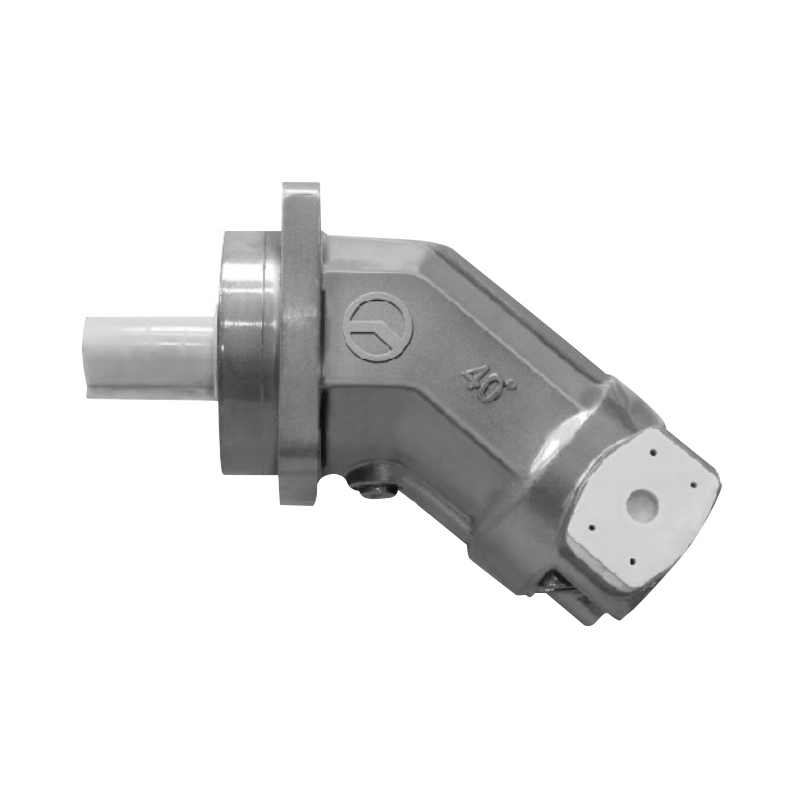
Hydrostatic pressure testing: Pressure vessels, pipelines, valves, and hydraulic components are tested to proof pressures significantly above their rated working pressure using triplex pump test rigs. The precise pressure control and stable output of the triplex pump allows operators to reach and hold exact test pressures without overshoot, which is essential for meaningful test results and component safety. High-performance piston motors are often used as drive units in hydraulic-drive triplex test pump configurations.
Triplex Pump vs Other Pump Technologies
Selecting between pump technologies requires matching the pump's inherent characteristics to the application's specific demands. Triplex pumps are not always the optimal choice — understanding where they outperform and where they are outperformed by alternatives enables better specification decisions.
Compared to vane pumps, triplex pumps offer dramatically higher maximum pressure capability and handle a wider range of fluid types, including water and mildly abrasive fluids that would rapidly destroy vane pump internals. Vane pumps, however, deliver smoother flow at lower pressures, are more compact per unit of output at medium pressures, and are significantly quieter — making them the better choice for machine tool hydraulics, injection molding circuits, and other stationary industrial applications where pressure requirements are below 250 bar and noise is a design constraint.
Compared to centrifugal pumps, triplex pumps produce much higher pressures from a given unit size and maintain consistent flow output regardless of system back pressure — a defining advantage of positive displacement designs. Centrifugal pumps are superior for large-volume, low-pressure transfer duties where their simple construction, low maintenance, and high flow-per-unit-cost make them the economical choice. Centrifugal pumps are not suitable for applications above 300–400 PSI without staging, and their output flow varies significantly with back pressure — a characteristic that makes them unreliable for precise dosing or high-pressure generation.
| Parameter | Triplex Pump | Vane Pump | Gear Pump | Centrifugal Pump |
|---|---|---|---|---|
| Max. pressure | Up to 10,000+ PSI | Up to 3,600 PSI | Up to 4,350 PSI | Up to ~400 PSI |
| Flow consistency | High (low pulsation) | Very high | Medium | Variable with pressure |
| Fluid types | Water, oils, chemicals | Hydraulic oils | Oils, viscous fluids | Water, low-viscosity |
| Abrasive fluid tolerance | Moderate (ceramic plungers) | Low | Low | High (open impeller) |
| Positive displacement | Yes | Yes | Yes | No |
| Relative unit cost | High | Medium | Low | Low–Medium |
How to Select the Right Triplex Pump
Specifying a triplex pump correctly requires working through five parameters in a defined sequence. Each step narrows the acceptable product range and prevents the mismatch between pump capability and application demand that is the primary cause of premature failure. For a broader overview of hydraulic pumps and how triplex technology fits within the wider hydraulic product landscape, consulting a specialist supplier early in the specification process reduces the risk of costly late-stage design changes.
Step 1 — Define maximum working pressure. Identify the highest sustained pressure the pump must produce, including any transient spikes during valve closure or system start-up. Select a pump with a rated maximum pressure at least 15% above this value. For applications where pressure must be held precisely — hydrostatic testing, RO membrane feed — also consider whether a back-pressure regulator or pressure relief valve will be required to protect the system from pump overpressure during flow restriction events.
Step 2 — Calculate required flow rate. Determine the volumetric flow demand of the application in gallons per minute or liters per minute. For cleaning and jetting applications, nozzle flow rate at operating pressure determines this directly. For chemical dosing, the required dose rate per unit time defines it. Select a pump displacement and operating speed combination that delivers the required flow at rated pressure with a 10–15% margin for efficiency losses and seal wear over service life.
Step 3 — Identify the fluid characteristics. Temperature, viscosity, pH, and the presence of solids or abrasives all affect material selection for the fluid end. Water service at neutral pH can use standard stainless steel valves and ceramic plungers. Acidic or caustic service requires duplex stainless, Hastelloy, or PVDF-lined fluid ends. Abrasive slurries require hardened valve seats and tungsten carbide or ceramic plunger coatings. Selecting the wrong material for the fluid is the leading cause of rapid fluid-end deterioration in triplex pump applications.
Step 4 — Select the drive configuration. Triplex pumps are available with direct-coupled electric motor drives, gearbox-reduced drives for low-speed high-torque applications, diesel engine drives for field-deployable equipment, and hydraulic motor drives for integration with existing hydraulic power systems. The drive configuration determines the available speed range and, therefore, the flow control strategy — fixed-speed drives require a bypass valve or pressure regulator for flow control, while variable-speed drives allow direct flow adjustment through speed variation.
Step 5 — Specify packing and seal materials. The packing seal in a triplex plunger pump is a consumable component that must be matched to the fluid, pressure, and temperature. Standard nitrile packing suits water and hydraulic oil service to 80°C. PTFE packing handles aggressive chemicals and elevated temperatures. High-pressure applications above 5,000 PSI require multi-ring lantern-supported packing arrangements. Confirm that replacement packing is readily available from the manufacturer or distributor before finalizing the pump selection — availability of wear parts is as important as initial pump performance for long-term operational cost.
Maintenance and Common Failure Points
Triplex pumps are mechanically robust and capable of very long service lives when maintained correctly. The majority of triplex pump failures are attributable to a small number of well-understood and preventable causes.
Packing seal wear and leakage is the most frequent maintenance task on triplex plunger pumps. Packing seals have a finite service life measured in operating hours and are designed to be field-replaceable without pump disassembly. Monitor the packing gland for weeping — a small amount of fluid seepage at the packing is normal and provides lubrication for the plunger surface, but a continuous drip or stream indicates that the packing has reached the end of its service life and requires replacement. Allowing packing to run beyond its service life causes plunger scoring, which dramatically increases future packing wear rates and may require plunger replacement.
Suction and discharge valve wear is the second most common failure mode. The check valves in the fluid end open and close thousands of times per hour under full differential pressure. Valve seats and balls or discs wear gradually, and a valve that does not seat fully reduces volumetric efficiency and causes pressure to equalize across the non-seating valve — generating heat and accelerating wear in the remaining valves. Symptoms include reduced flow output at rated pressure and irregular discharge pressure fluctuation. Inspect and replace valves as a set rather than individually — if one valve has failed, the others are likely at the same wear stage.
Cavitation damage in triplex pumps occurs when the suction condition is inadequate — due to a restricted inlet strainer, excessive inlet line length, high fluid temperature, or pump speed above the design limit for the suction NPSH available. Cavitation erodes the suction valve seats and cylinder bore surfaces, producing a characteristic pitting pattern visible on disassembly. Prevention requires correct suction line sizing (typically 1.5 to 2× the discharge line diameter), a clean inlet strainer, and a fluid temperature within the pump's rated range.
Power-end lubrication maintenance is straightforward but critical. The crankshaft, connecting rods, crosshead guides, and bearings run in splash-lubricated or pressure-lubricated oil baths. Change the power-end oil at the manufacturer's recommended interval — typically every 500 to 1,000 operating hours — and inspect the oil for water contamination (milky appearance indicates packing leakage into the power end) or metallic particle contamination (indicating bearing or crosshead wear). A magnetic drain plug installed in the power-end sump provides early warning of ferrous wear debris between oil changes.
Pulsation dampener inspection should be included in every scheduled service. A pulsation dampener with a depleted gas pre-charge provides no dampening effect and allows full pump pulsation to reach downstream components. Check dampener pre-charge pressure at every service interval according to the manufacturer's specification — typically 60% of the pump's operating pressure for bladder-type dampeners.